

Contractor Marketing: How to Get More Local Jobs Online
This guide is for owners of local trade businesses: plumbers, roofers, HVAC companies, landscapers, painters, pavers and every other crew that gets paid to show up and do the work. If the phone isn't ringing the way it should, contractor marketing is how you fix that.
Most guides hand you a list of fifteen tactics and leave you to figure out the rest. This one covers the five things that decide whether a homeowner finds you and calls: your website, your Google Business Profile, your Google reviews, where your leads come from, and what happens after someone reaches out. Then it tells you what order to fix them in. Each part links to a deeper post if you want the full detail.
What is contractor marketing?
Contractor marketing is everything that gets a local homeowner to find your business, trust it and call you. For most trades today that means showing up on Google, having a website that works on a phone, and having enough real reviews that a stranger feels safe letting you into their home.
It is not big-brand advertising. You don't need a billboard or a viral video. You need to be the obvious choice when someone in your service area types your trade into Google.
Word of mouth still counts. But even a referral usually looks you up before calling. If what they find is thin or out of date, the referral can quietly go to someone else, and you never hear about it.
It is a system, not a one-time project. A website, a profile and a review habit work together. Fix one and ignore the others, and you leave most of the benefit on the table.
From Collin
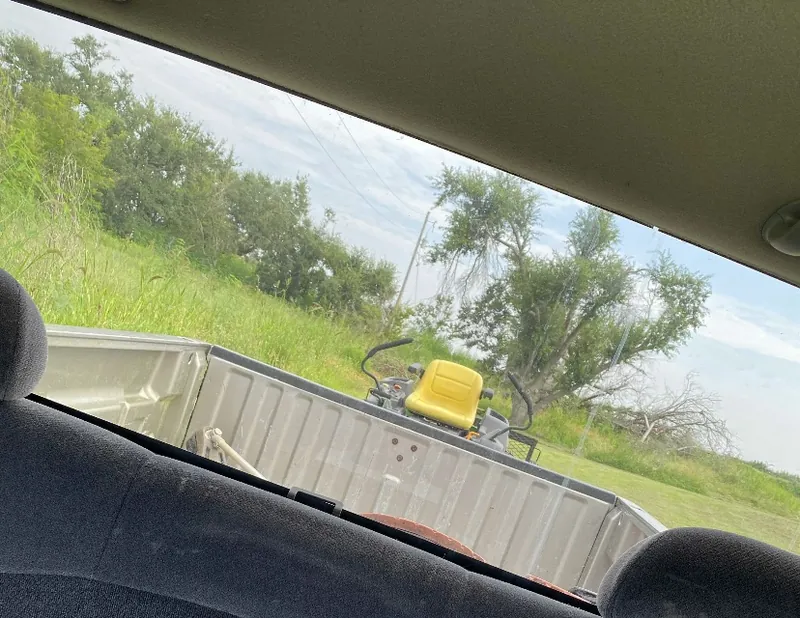
When I ran my own lawn and landscaping business, most of my work came from word of mouth. I also grew by buying another business like mine. Both still count today, but a referral checks you out online before calling, so your website and Google profile have to back it up.
Where do homeowners look for a contractor?
Many start on Google, often on a phone. They see the map results first, then the websites below them. They compare reviews, photos and how easy it is to call, and they often contact more than one business before choosing.
That gives you three places to win:
- The map results, which come from your Google Business Profile.
- The regular results, which come from your website.
- The decision, which comes down to your reviews, your photos and how fast you can be reached.
Reviews carry a lot of weight in that last step. In BrightLocal's 2026 survey of US consumers, 97% said they read reviews for local businesses (BrightLocal survey).

How does Google decide which contractors show up?
Google says its local results are based mainly on three things: relevance (how well you match the search), distance (how close you are to the searcher) and prominence (how well known you are). It also says there is no way to pay for a better local ranking.
That's straight from Google’s help page on local ranking. Here's what each one means for you:
- Relevance: a complete profile and a website that clearly says what you do. A roofer whose site only says "home services" is hard for Google to match to "roof repair".
- Distance: you can't move your shop, but you can list the areas you truly serve and build pages for the towns you want work from.
- Prominence: reviews, links from other websites, and how much people talk about you. Google names review count and ratings as part of this.
- RelevanceDoes your profile and site match the search?
- DistanceHow close are you to the person searching?
- ProminenceReviews, links and how well known you are.
Do you need a website if you have Facebook?
Yes, if you want customers who don't already know you. A Facebook page reaches your followers and their friends. A website is what shows up when a stranger searches your trade and your town, and it's the one place you fully control.
Facebook is good for sharing finished jobs and staying in front of past customers. But you can't control how it looks, you can't build a page for each service you offer, and some homeowners won't hire from a Facebook page alone.
Keep posting on Facebook. Just don't make it the only place a new customer can check you out. Our contractor website checklist covers what a site needs to earn its keep.
How much does a contractor website cost?
It depends on how many pages you need, whether the design is custom, who handles the words and photos, and what's included after launch. At Xposifi the build is quoted on a free call, and monthly plans are $399.99 (Launch) or $599.99 (Scale) a month.
The cheapest option is rarely the cheapest in the end. A site that doesn't bring in calls costs you every job you never heard about.
We break down every way to pay, what each one includes and what to own before you sign in how much a contractor website costs.
What should a contractor website have?
A contractor website should make three things obvious within seconds: what you do, where you do it and how to reach you. After that it needs proof, like real photos and real reviews, and one clear next step on every page.
- Tap-to-call number at the top of every page
- What you do and where, on the first screen
- A page for each main service
- Your service area, named town by town
- Real project photos
- Real reviews from real customers
- License and insurance, if you carry them
- A short quote form or booking option
Phones matter most. Google uses the mobile version of a site for indexing and ranking, so a site that only looks right on a computer is working against you.
The full list, with why each item matters, is in our website checklist for contractors. Or see how we build them on our website design for local service businesses page.
How do you show up on Google Maps?
You show up on Google Maps through a verified Google Business Profile that is complete, accurate and kept active. Fill in every section, follow Google's rules on your name and address, and keep adding photos and reviews.
Verify it. Google offers several ways to verify, and recommends a live video call when your business is eligible (Google verification help).
Follow the rules. Google doesn't allow extra keywords in your business name, and its guidelines say a business that travels to customers should hide its address.
Keep it alive. New photos, accurate hours, and replies to reviews.
Step-by-step setup is in our Google Business Profile guide for contractors. If you'd rather hand it off, it's part of our local SEO for contractors.
Why do Google reviews matter so much?
Reviews do two jobs. They help you rank, because Google counts reviews as part of how well known a business is. And they help you win the call, because homeowners trust other homeowners more than any ad you could run.
- 97%read reviews for local businesses
- 74%look for reviews from the last three months
- 89%expect owners to respond to reviews
That middle number is the one most owners miss. A pile of reviews from three years ago doesn't help much. You need a steady flow.
Our post on how to get more Google reviews covers the timing, the wording and what you're not allowed to do. Or let us run it with Google reviews management.
Should you buy leads from Angi or Thumbtack?
Paid lead sites can fill a slow calendar, especially when you're new. But you usually pay for each lead whether or not you get the job, and the same request can go to several pros. They work best as a top-up, not your whole plan.
HomeAdvisor, part of Angi, says on its own help page that pros are charged for each lead whether or not they win the job, and that customers are matched with up to four pros.
Every customer who finds you on your own website or Google profile is a lead you didn't pay for and didn't share. Over time, that's where most owners want their work to come from.
The full comparison, including how to work out what each job really costs you, is in Angi and Thumbtack leads vs. your own website.
How do you turn website visits into booked jobs?
Make the next step obvious and easy, then answer fast. Put a tap-to-call button on every page, offer a short quote form or a booking calendar, and reply quickly. A visitor who has to hunt for your number may call the next business.
Ask for less. A quote form that asks for a name, a phone number and what they need gets filled out more often than one with fifteen questions. You can get the details on the call.
Answer fast. When a homeowner contacts several companies, the first one to call back has an edge. If you're on a roof all day, a booking calendar or a text-back can hold their spot.
Know what's working. Call tracking shows which calls came from your website, so you know what to keep doing.
This is what our lead generation for local service businesses sets up.
How much should a contractor spend on marketing?
There's no single right number. Start from what a typical job is worth to you, decide how many extra jobs a month you want, and judge every channel by what it costs per booked job, not per click or per lead.
The U.S. Small Business Administration's advice is simple: compare your marketing costs to the revenue they bring in, and revisit your plan at least once a year.
| Step | What you do |
|---|---|
| 1 | Add up what you spent on one channel last month. |
| 2 | Count the jobs you actually booked from it. |
| 3 | Divide spend by booked jobs. That's your cost per job. |
| 4 | Compare it to your profit on a typical job. |
A channel that looks cheap per lead can be expensive per booked job, and the other way around.
How long does contractor marketing take to work?
Some parts help right away and some take months. A clearer website and a complete Google profile help the people already finding you. Ranking higher on Google builds more slowly, and nobody can honestly promise a date.
Google itself says some changes take effect in a few hours and others can take several months, and that there are no secrets that will automatically rank a site first (Google’s SEO starter guide).
Fast wins: tap-to-call, a clear service list, real photos, and asking every happy customer for a review.
Slow wins: ranking for more searches in more towns. That builds month after month as your site, profile and reviews grow.
What are the most common contractor marketing mistakes?
The common ones: relying on one source of work, a website that's hard to use on a phone, a Google profile nobody looks after, never asking for reviews, slow callbacks, and paying for marketing without tracking which jobs it brought in.
- One basket. All your work comes from one platform or one referral partner. If it dries up, so do you.
- The phone-unfriendly site. Tiny text, no tap-to-call, slow to load.
- The forgotten profile. Old hours, no photos, reviews with no replies.
- Never asking. Happy customers rarely leave reviews unless asked.
- Slow callbacks. The lead was real; it just went to whoever answered first.
- No tracking. You can't cut what doesn't work if you don't know what works.
From Collin
The biggest mistake I see on first calls: owners haven't optimized their website or their Google Business Profile at all. They exist, but nothing has been done to help them show up.
What contractor marketing can't fix
Marketing brings people to you. It can't fix slow callbacks, no-shows, poor work or prices that don't match your area. If those are the problem, more leads just means more people disappointed, and more bad reviews.
Be honest about it before you spend money. If you can't answer the phone during the day, a booking form or a callback promise may be worth more than any ad. If your reviews mention the same complaint, fix that first.
And be wary of anyone who guarantees you the #1 spot on Google. Google controls its own results. We don't make that promise, and nobody honest does.
Where should you start?
Start with what customers see first: your Google Business Profile and your website on a phone. Then build a steady habit of asking for reviews. Once those work, add more service and town pages, and cut back paid leads as your own calls grow.
- Claim your profileVerify it and fill in every section.
- Fix the phone viewOne tap to call, clear services and area.
- Ask for reviewsEvery happy customer, right after the job.
- Add real photosTo your site and your profile, every month.
- Grow your pagesMore services and towns, one at a time.
- Cut paid leadsAs your own calls take over.
Frequently asked questions
Is contractor marketing worth it for a small crew?
It is if it's judged by booked jobs. A small crew often only needs a few extra jobs a month for a website and review system to pay for themselves. Track where each job came from so you know.
Can I do my own contractor marketing?
Yes. Claiming your Google Business Profile and asking for reviews cost nothing but time. Many owners do those themselves and hire out the website, since that's where skill and time matter most.
Do I need to run ads?
Not to start. Ads can bring calls quickly, but they stop the moment you stop paying. Get your profile, website and reviews in shape first, so any ad money you spend later lands on something that converts.
What's the fastest thing I can do this week?
Open your website on your own phone and try to call yourself in one tap. Then claim or check your Google Business Profile and ask your last five happy customers for a review.
Get a free plan for your business
Book a free strategy call. We'll look at your website, your Google profile and your reviews, and tell you plainly what's costing you calls and what to fix first.
There's no charge for the call, and booking it doesn't commit you to anything.